


Cable production process: conductor stranding
Time of Release:
2022-11-26
Source:
Author:
Stranding (stranding): The process of twisting multiple monofilaments with a small diameter into a conductive core of larger section according to certain rules.
1. There are two kinds of stranding: formal stranding and informal stranding.
Formal stranding can be divided into regular concentric single-wire stranding and regular concentric strand stranding Formal concentric single-wire stranding:
(1) Ordinary stranded wire: with a single wire of the same diameter, according to the way of concentric circles, layer by layer and regular twisting, each layer of twisting direction is opposite.
(2) Combined stranded wire: It is made of single wire twisted with the same diameter, different material or different diameter and different material. (Representative products such as overhead conductors)
Regular concentric stranding: It is a concentric strand stranded wire that is concentric stranded by multiple ordinary strands or bundled wires.
Informal stranding (bundle wire): a stranded wire formed by multiple single wires twisted together in the same twisting direction without following the twisting law, the position between the single wires is not fixed to each other, and the shape of the bundle wire is difficult to keep round.
2. The biggest difference between bundled wire and ordinary stranded wire is: each single wire of ordinary stranded wire has a fixed position, and it is regularly stranded layer by layer; There is no fixed position between the monofilaments of the bundle wire, and it is not stranded together according to the twisting law.
3. Characteristics of informal stranding (bundle line): because each single wire in the bundle line is twisted in one direction, the sliding margin between the single wires is large when bending, and the bending resistance is small, so the bending performance of the bundle line is particularly good, and the wire and cable products that need to be soft and often move are used as the conductive core.
4. Features of stranded core:
(1) Good flexibility; The use of multiple wire cores twisted by a number of smaller diameter monofilaments can improve the bending ability of the cable, which is convenient for the processing, manufacturing, installation and laying of wires and cables.
(2) Good stability; Multiple monofilaments are twisted into a core according to a certain direction and twisting rules, because the position of each monofilament in the stranded wire is rotated in the elongation zone of the upper part of the strand and the compression zone of the lower part of the strand, when the stranded wire is bent, no deformation will occur.
(3) Good reliability; The use of a single wire as a conductor of wire and cable is easy to affect the reliability of the conductive core by the unevenness of the material or the defects generated in the stranding, and the defects such as the core synthesized with multiple single-wire twists have been dispersed, and will not be concentrated on a certain point of the conductor, and the reliability of the conductive core is much stronger.
(4) High strength; Compared with multiple stranded cores of a single wire with the same cross-sectional size, the strength of the stranded core is higher than that of a single wire.
5. Explanation of terms:
(1) Pitch: the distance that the monofilament extends one week to the axis.
(2) Pitch ratio: the ratio of the pitch length of the stranded wire to the diameter of the strand.
(3) The relationship between pitch and stranded wire softness: the smaller the pitch, the better the softness of the strand, on the contrary, the larger the pitch, the worse the softness of the strand.
(4) Twisting coefficient: the ratio of the actual length of the monofilament unfolded to the pitch length in one pitch of the strand.
(5) Twisting direction of stranded wire: right (Z direction) left direction (S direction)
(6) Tight conductor: common compression conductors include tight compression round, sector and tight press tile (five-core cable) semi-circular (two-core cable)
6. Purpose of pressing:
(1) Tight pressing sector conductor: reduce the outer diameter of the cable, save product cost, and reduce the weight of the cable.
(2) Tight pressing round conductor: improve the surface quality of the stranded conductor, reduce the diameter of the conductor, improve the conductor filling coefficient, the surface of the pressed conductor is smooth and round without burrs, and the electric field on the surface of the conductor is uniform. Save materials and reduce costs.
7. Conductor classification:
According to the GB/T3956 "Conductor of Cable" standard, there are four types of conductors, namely the 1st, 2nd, 5th and 6th. Type 1 is a solid conductor and Type 2 is a stranded conductor, both of which are suitable for fixing the conductor of the routed cable; Types 5 and 6 are stranded conductors, which are used for flexible cables and cords, and Type 6 is softer than Type 5.
previous page:
Related information
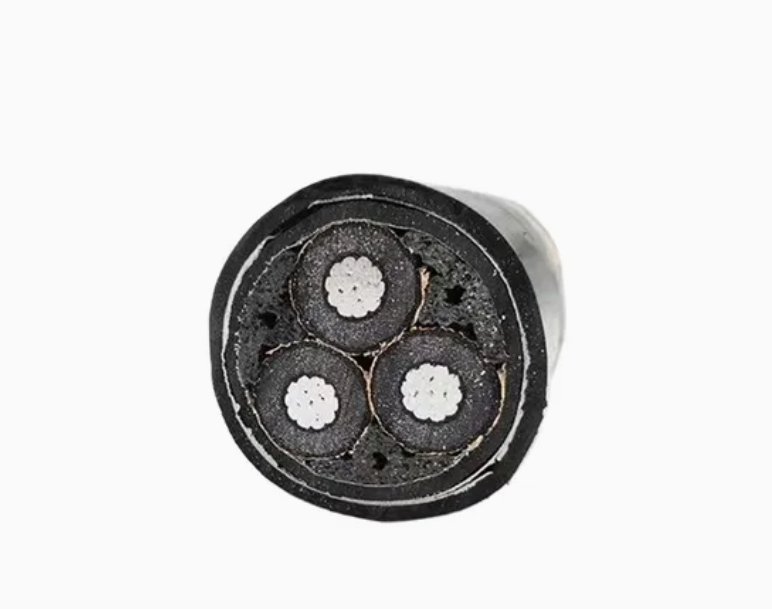
Key Features of 8.7/15kV Triple Core Aluminum Power Cables Explained
Key Features of 8.7/15kV Triple Core Aluminum Power Cables Explained In the realm of electrical engineering, choosing the right type of cable is crucial for ensuring efficient power transmission. One of the widely used cables in medium-voltage applications is the 8.7/15kV triple core aluminum power cable. This article delves into the key features of these cables, exploring their construction, adva
2026-10-04


Understanding 0.6/1kV Single Core Copper Conductor Power Cables
When it comes to electrical installations, choosing the right power cable is crucial for safety, efficiency, and longevity. One significant option in the market is the 0.6/1kV single core copper conductor power cable. This type of cable is designed to handle medium voltage applications, making it suitable for various industrial and commercial settings. The designation 0.6/1kV indicates that the ca
2026-09-27

Exploring the Durability of 8.7/15kV Aluminum Power Cables: A Comprehensive Guide
Exploring the Durability of 8.7/15kV Aluminum Power Cables Table of Contents 1. Introduction to 8.7/15kV Aluminum Power Cables 2. Understanding Power Cables and Their Importance 3. Aluminum vs. Copper: Material Comparison 4. Factors Affecting the Durability of 8.7/15kV Aluminum Power Cables 5. Applications of 8.7/15kV Aluminum Power Cables 6. Industry Standards for 8.7/15k
2026-09-20
0
Hunan Huatai Cable Co. LTD
Xiadopu Machinery Industrial Park, Ningxiang, Xiangjiang New District, Hunan Province

Follow us