


Why can't high-voltage wires be buried in the ground?
Time of Release:
2022-11-26
Source:
Author:
Over the hills
to transfer the power
Sleepless
Ten thousand lights together
Countless days and nights of perseverance
But it was blown away by a typhoon
Although it is a steel and iron bone, the high-voltage wire is not as strong as you think. A single super typhoon can scar the power grid.
So why can't you bury all the high-voltage wires in the ground like urban underground cables, so that you can't do it once and for all, and you are not afraid of many typhoons?
At present, ultra-high voltage transmission has not found an effective insulation material to make the outer skin insulation layer of the wire, so the ultra-high voltage wire is bare and cannot be buried underground.
There is a distributed capacitance around the wire, and the current can leak out through these capacitors, which increases the consumption on the one hand; On the other hand, there is also a risk of electric shock if any animal comes close.
Air is an insulator, but earth is a conductor. In the air, just put the wire directly there, but underground, you have to add layers of insulating shells to the wires, otherwise the electricity in the wires does not go far, and the leakage will leak little.
Underground cables are more complex than overhead line structures, high technical requirements, difficult manufacturing and construction, and cables buried underground, it is not easy to find faults, and it is difficult to repair and maintain.
In general, the cost of underground cables of the same voltage level will be several times or even dozens of times that of aerial high-voltage lines.
No one wants a power outage, but the power supply will not escape the trick, once there is a failure, you have to "dig three feet" to check and repair the cable.
First, they have to go through the formalities of excavating "underground passages"; Then, they have to work overtime to dig tunnels; Then they have to check the underground cables section by section to find out the fault point; Finally, the fault point can be targeted, and the right medicine can be prescribed. This delay is all the time of the big guys, and the power supply is also very wronged, they really want to quickly restore the power.
To sum up, high-voltage lines buried in the ground have both safety and economic problems.
previous page:
Related information
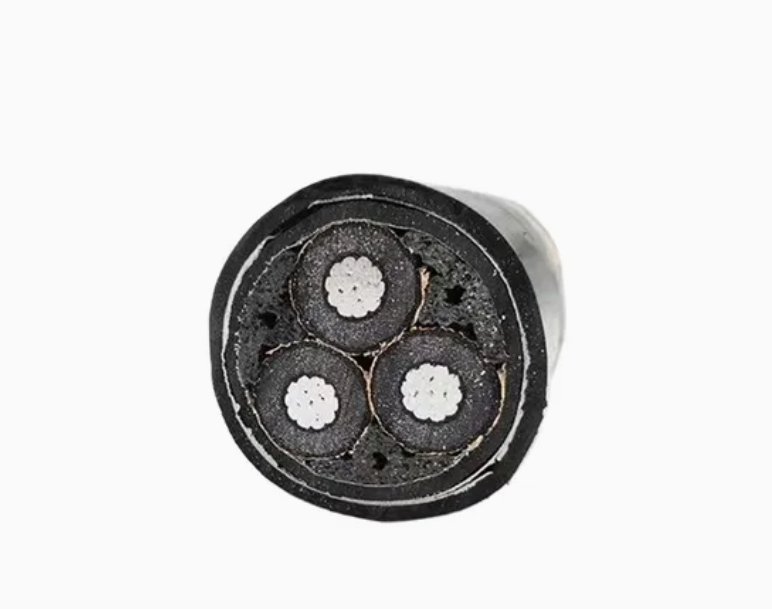
Key Features of 8.7/15kV Triple Core Aluminum Power Cables Explained
Key Features of 8.7/15kV Triple Core Aluminum Power Cables Explained In the realm of electrical engineering, choosing the right type of cable is crucial for ensuring efficient power transmission. One of the widely used cables in medium-voltage applications is the 8.7/15kV triple core aluminum power cable. This article delves into the key features of these cables, exploring their construction, adva
2026-10-04


Understanding 0.6/1kV Single Core Copper Conductor Power Cables
When it comes to electrical installations, choosing the right power cable is crucial for safety, efficiency, and longevity. One significant option in the market is the 0.6/1kV single core copper conductor power cable. This type of cable is designed to handle medium voltage applications, making it suitable for various industrial and commercial settings. The designation 0.6/1kV indicates that the ca
2026-09-27

Exploring the Durability of 8.7/15kV Aluminum Power Cables: A Comprehensive Guide
Exploring the Durability of 8.7/15kV Aluminum Power Cables Table of Contents 1. Introduction to 8.7/15kV Aluminum Power Cables 2. Understanding Power Cables and Their Importance 3. Aluminum vs. Copper: Material Comparison 4. Factors Affecting the Durability of 8.7/15kV Aluminum Power Cables 5. Applications of 8.7/15kV Aluminum Power Cables 6. Industry Standards for 8.7/15k
2026-09-20
0
Hunan Huatai Cable Co. LTD
Xiadopu Machinery Industrial Park, Ningxiang, Xiangjiang New District, Hunan Province

Follow us